Source Wireless Stand Alone Smoke Detector for Homes, Offices, Warehouses
Compare 30 wireless stand alone smoke detector options from verified suppliers. Browse models with electro-optical and photoelectric sensing, varying alarm volumes, and CE certifications for indoor safety applications.
Key considerations
Products List




Comprehensive Sourcing Guide
Strategic Sourcing Guide for Wireless Stand-Alone Smoke Detectors
Understanding Core Technical Specifications and Operational Modes
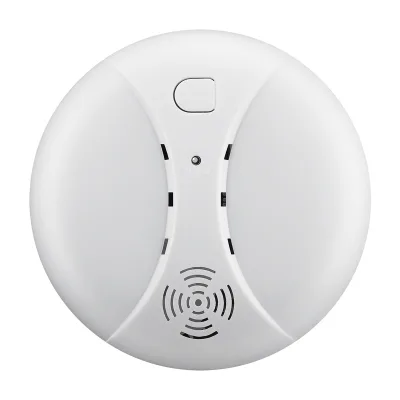
When sourcing wireless stand-alone smoke detectors, buyers must first distinguish between the various operational principles and transmission modes available in the current market. The observed product landscape reveals a significant divergence in working principles, primarily between electro-optical types and photoelectric smoke styles. For applications requiring high sensitivity to invisible combustion particles, the electro-optical type is a critical specification to verify. These units typically function on a passive working mode, meaning they do not emit a continuous signal to the environment but rather monitor the air for changes in light scattering caused by smoke.
A crucial technical differentiator in this category is the detection logic. High-reliability units often employ a "detect twice" methodology, where the sensor must confirm the presence of smoke on two separate occasions before triggering an alarm. This logic is designed to minimize false alarms caused by transient dust or steam, ensuring that the alarm volume, which can reach 85dB at a distance of 3 meters, is reserved for genuine threats. The physical dimensions of these devices vary, with common specifications including a size of 110mm by 45mm or a cubic package size of 13cm by 13cm by 5cm. Buyers should verify that the chosen model fits the intended ceiling mount or wall mount installation requirements, as the installation method is often ceiling-mounted for optimal smoke dispersion coverage.
The power supply architecture is another fundamental technical consideration. While some units rely on a standard 9V battery for portability and ease of installation, others are designed for hardwired or DC12V-DC24V power supply systems. The working current for these devices typically ranges between 16mA and 17mA, indicating a low-power design suitable for battery longevity or energy-efficient hardwired systems. Furthermore, the wireless transmission mode is a defining feature of this product class. The signal transmission is explicitly wireless, operating on specific frequencies such as 229.95MHz, 433MHz, or 315MHz. This frequency variance is critical for compatibility; a buyer sourcing a system for a large facility must ensure that the receiver unit matches the specific frequency of the detectors to prevent communication failures.
Compliance, Certification, and Regulatory Standards
Navigating the compliance landscape for wireless smoke detectors requires a rigorous verification of certifications and adherence to international standards. The market data indicates that CE certification is a prevalent attribute, often listed alongside RoHS compliance for electronic components. These certifications are essential for market access in Europe and other regions that adopt similar regulatory frameworks. However, buyers must look beyond the presence of a certification mark and verify the specific standards against which the product was tested.
In the realm of smoke detection, specific performance standards dictate the reliability of the device. The observed context references standards such as EN50291 and UL2034. EN50291 is a European standard for smoke detectors, while UL2034 is a widely recognized North American standard for the protection of life and property. It is vital for procurement teams to confirm that the supplier can provide test reports or documentation proving compliance with these specific standards, rather than relying on general claims. The absence of a specific standard reference in a product listing should trigger a request for validation, as smoke detectors are life-safety devices where non-compliance can lead to catastrophic liability.
Additionally, the material composition of the detector housing must be considered in the context of environmental regulations. Many units are constructed from ABS plastic, which offers durability and resistance to impact. The "Exexute" standard mentioned in some product attributes suggests adherence to specific execution protocols, likely referring to the manufacturing or testing execution standards. Buyers should also be aware of background standards like EN54 and EN14604, which are often cited in the broader industry context. While these may not be explicitly listed on every product page, they represent the benchmark for fire detection performance. A robust sourcing strategy involves demanding evidence that the product meets or exceeds these industry benchmarks, ensuring that the detectors will perform reliably in real-world fire scenarios.
Cost Drivers and Economic Factors in Procurement
The economic landscape for wireless stand-alone smoke detectors is characterized by a wide variance in pricing and minimum order quantities (MOQ). The observed price range spans from 1 USD to 8800 USD, a disparity that reflects differences in technology, build quality, and the scale of the order. The lower end of the spectrum likely represents single-unit purchases or basic models with minimal features, while the higher end may encompass bulk industrial systems or specialized high-sensitivity units. Understanding these cost drivers is essential for budgeting and negotiating effectively.
Minimum Order Quantity (MOQ) is another significant economic factor, with observed ranges extending from 1 unit to 5000 units. This flexibility allows buyers to start with small pilot programs or scale up to large-scale deployments without being locked into excessive inventory. However, the unit price often decreases as the order volume increases, a standard economies-of-scale principle. Buyers should analyze the total cost of ownership, which includes not only the unit price but also the cost of batteries, installation labor, and potential maintenance. For instance, a detector powered by a 9V battery may have a lower upfront cost but higher long-term maintenance costs compared to a DC12V-DC24V hardwired unit, depending on the frequency of battery replacement.
The packaging type also influences logistics costs. Products are observed to come in either Color Box or CTN (Carton) packaging. Color Box packaging is often used for retail or individual unit sales, while CTN packaging is more suitable for bulk industrial shipping. The choice of packaging can impact shipping efficiency and damage rates during transit. Furthermore, the origin of the product, primarily noted as China or Shenzhen, plays a role in pricing due to manufacturing costs and logistics. Buyers should factor in lead times and shipping costs associated with these origins when calculating the final landed cost of the equipment.
Typical Applications and Installation Environments
The application scope for wireless stand-alone smoke detectors is diverse, ranging from residential settings to commercial and industrial facilities. The "Indoor" application attribute is a primary classification, indicating that these devices are designed for internal environments where smoke accumulation is a risk. The "Space Security Alarm Detector" attribute suggests that these units can also be integrated into broader security systems, providing a dual function of fire detection and intrusion prevention in some configurations.
Installation requirements are a critical factor in determining the suitability of a detector for a specific site. The "Ceiling Mount" and "Ceiling Installation" attributes are dominant, reflecting the physical behavior of smoke, which rises to the highest point in a room. The "Inclination Sensor" and "Infrared Temperature Sensor" attributes indicate that some advanced models may include tilt detection or temperature monitoring capabilities, adding layers of security and functionality. For example, a detector with an inclination sensor might be used in areas where the mounting angle is critical for proper operation, or to detect tampering.
The "Active" approach to anti-theft alarm systems suggests that these detectors can be part of a larger active security network, where they communicate with a central monitoring station or a local alarm panel. This is particularly relevant for commercial buildings, warehouses, and public spaces where rapid response to fire or security breaches is necessary. The "Detecting Time" of approximately 5 seconds highlights the speed of response, which is crucial for early warning systems. Buyers should match the specific application needs, such as the size of the room, the ceiling height, and the potential for false alarms, to the technical specifications of the detector.
Supplier Evaluation and Quality Assurance Protocols
Evaluating suppliers for wireless smoke detectors requires a multi-faceted approach that goes beyond price comparisons. The "Japan Electrochemistry Sensor" attribute highlights the importance of sensor quality, as the core component of the detector significantly impacts its sensitivity and reliability. Buyers should verify the source of the sensors used in the product, as high-quality sensors from reputable manufacturers like Japan Electrochemistry are often a marker of superior product performance.
Quality control measures should be a central part of the supplier evaluation process. The "1 Year Warranty" is a standard offering, but buyers should inquire about the terms of the warranty, including what is covered and the process for claims. The "Alarm Volume" of 85dB and the "Alarm Temperature" of 57℃ (135℉) are specific performance metrics that should be verified through third-party testing or certification reports. These metrics ensure that the alarm is loud enough to be heard in noisy environments and that the temperature threshold is appropriate for the intended application.
The "Customization: Available" attribute indicates that suppliers may offer tailored solutions, such as specific frequencies, colors, or packaging options. This flexibility can be valuable for buyers with unique requirements, but it also adds complexity to the quality assurance process. Buyers should establish clear communication channels with suppliers to define customization requirements and ensure that these modifications do not compromise the device's safety or performance. Additionally, the "Product Name" and "Model" variations, such as "Smoke Detector DSW-928N-3" or "ZDD-303CI," should be carefully matched to the specific needs of the project to avoid confusion and ensure compatibility.
Long-Term Procurement and Lifecycle Management
Sourcing wireless smoke detectors is not a one-time transaction but a long-term commitment that requires careful planning for lifecycle management. The "Detecting Smoke Method" of requiring two detections before alarm activation is a feature that enhances reliability over time, reducing the likelihood of false alarms that could lead to complacency. However, this also means that the sensor must be maintained and tested regularly to ensure it remains sensitive to smoke.
The "Warranty" period of 1 year is a starting point, but buyers should consider the expected lifespan of the device. The "Material" of ABS plastic suggests durability, but the electronic components, such as the battery and sensor, have finite lifespans. Buyers should plan for periodic replacement of batteries and potentially the entire unit after a certain number of years, depending on the manufacturer's recommendations and the operating environment.
The "Wireless Frequency" of 433MHz/315MHz or 229.95MHz also has long-term implications. As technology evolves, frequency bands may become congested or subject to regulatory changes. Buyers should consider the scalability of their wireless network and ensure that the chosen frequency is compatible with future expansion or integration with other smart building systems. The "Signal Transmission" being wireless offers flexibility but also introduces potential vulnerabilities, such as interference or signal loss, which must be mitigated through proper installation and regular system checks.
Comparative Analysis of Key Product Attributes
To facilitate decision-making, the following table summarizes the key attributes observed in the market for wireless stand-alone smoke detectors. This comparison highlights the diversity in specifications and helps buyers identify the most suitable options for their specific needs.
| Attribute Category | Observed Specification | Relevance to Procurement |
|---|---|---|
| Working Principle | Electro-Optical Type, Photoelectric Smoke Style | Determines sensitivity to different types of smoke; essential for fire type matching. |
| Transmission Mode | Wireless (229.95MHz, 433MHz, 315MHz) | Critical for system compatibility and range planning; must match receiver frequency. |
| Power Supply | DC12V-DC24V, 9V Battery | Impacts installation complexity and long-term maintenance costs (battery replacement). |
| Alarm Volume | ≥80dB, 85dB (at 3m) | Ensures audibility in noisy environments; a key safety requirement. |
| Detection Logic | Detect Once Every 5s, Detects Smoke Twice | Reduces false alarms; indicates higher reliability and sophistication. |
| Certification | CE, RoHS, EN50291, UL2034 | Mandatory for legal compliance and market access; verifies safety standards. |
| Material | ABS Plastic | Affects durability and resistance to environmental factors. |
| Installation | Ceiling Mount, Ceiling Installation | Determines mounting hardware requirements and optimal placement. |
| Sensor Type | Japan Electrochemistry, Infrared Temperature | High-quality sensors improve accuracy; temperature sensors add versatility. |
| Warranty | 1 Year | Standard protection period; terms should be reviewed for coverage details. |
This comparative analysis underscores the importance of aligning specific technical attributes with the operational requirements of the procurement project. By carefully evaluating these factors, buyers can ensure that the selected wireless stand-alone smoke detectors provide the necessary safety, reliability, and compliance for their intended applications.
FAQs
What is the working principle of these detectors?
These detectors operate on an electro-optical type working principle. They function in a passive mode and detect smoke only after confirming the presence of smoke twice to minimize false alarms.
How is the alarm volume specified for these units?
The alarm volume reaches at least 80dB within 1 meter and 85dB at 3 meters. The output includes both sound and a flashing light to ensure visibility and audibility in various environments.
Which power supply options are available for these devices?
Available power supplies include DC12V to DC24V or a 9V battery. The working current typically ranges between 16mA and 17mA, ensuring low power consumption for extended operation.
Can these detectors be customized for specific needs?
Yes, customization is available for these products. Buyers can request specific configurations while ensuring the core safety features like the 1-year warranty and CE certification remain intact.
What certifications do these smoke detectors hold?
These detectors hold CE certification and comply with standards such as EN50291 or UL2034. Some models also meet RoHS standards, ensuring compliance with environmental and safety regulations.
How do these detectors transmit alarm signals?
The signal transmission is wireless, operating on frequencies like 433MHz, 315MHz, or 229.95MHz. This wireless mode allows for flexible installation without the need for complex wiring systems.